2022 Conference on Diversity in International Affairs
Event date
The 2022 Conference on Diversity in International Affairs was a collaborative effort by the Council on Foreign Relations, the Global Access Pipeline, and the International Career Advancement Program.
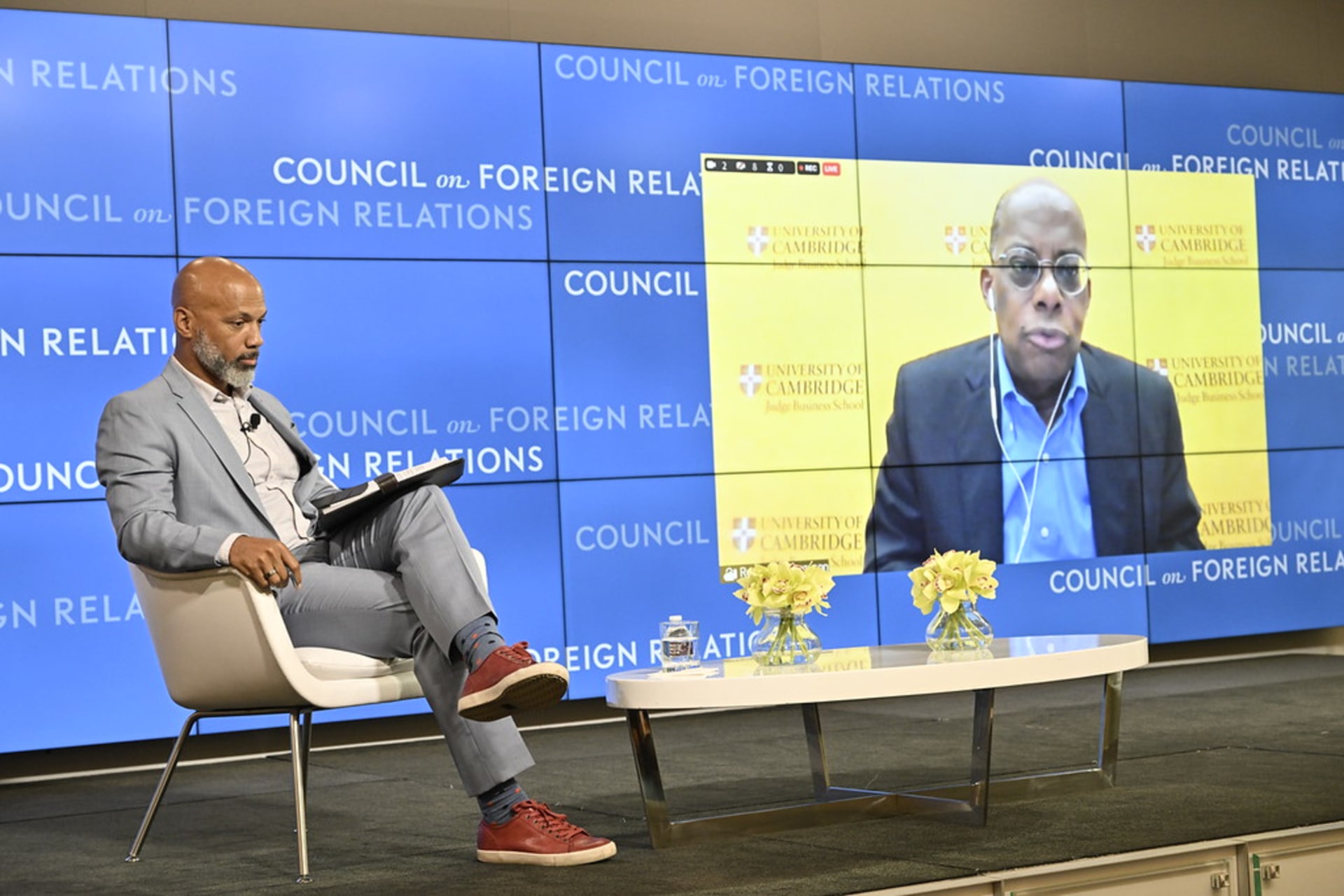
In-Person Keynote Session: A Conversation With Roger Ferguson
Speaker
- Roger W. Ferguson Jr.Steven A. Tananbaum Distinguished Fellow for International Economics, Council on Foreign Relations
Presider
- Ché BoldenPresident and Chief Executive, The Charles F. Bolden Group
Introductory Remarks
- Richard HaassPresident, Council on Foreign Relations
Transcript
HAASS: Well, good afternoon. I’m still Richard Haass even after that introduction, and I want to welcome you all to today’s meeting, which is the keynote session of this year’s Conference on Diversity in International Affairs.
This is our tenth anniversary conference and it’s part of the long-standing commitment on the part of the Council on Foreign Relations to diversity and building the talent pipeline for careers in international relations and foreign policy that this country and this world of ours both need.
This event is a joint one. It’s presented by the Council, by Global Access Pipeline, and the International Career Advancement Program, and we want to thank GAP and ICAP for their collaboration on this conference.
I also want to emphasize the importance of diversity in this field. I’ve been involved in it for nearly half a century and I strongly believe that having the United States represented in government and international business in the academy and think tanks and journalism and NGOs, you name it, that it’s, truly, important that people represent the diversity of our country and that’s why the Council on Foreign Relations is as committed as it is to help build the pipeline of...
In-Person Plenary One: New and Next--U.S. Foreign Policy Priorities Around the World
Speakers
- Amaka AnkuPractice Head, Eurasia Group
- Alex T. JohnsonDeputy Director, U.S. Foreign Policy, Open Society Foundations; CFR Term Member
- Ivan KanapathySenior Associate (non-resident), Freeman Chair in China Studies, Center for Strategic and International Studies; Adjunct Professor, Asian Studies Program, Edmund A. Walsh School of Foreign Service, Georgetown University; Former Deputy Senior Director for Asian Affairs and Director, China, Taiwan, and Mongolia, National Security Council; CFR Member
- Ana Janaina NelsonLatin America Lead, Amazon Web Services
Transcript
HAQ: Welcome, welcome, everybody. Glad that you could all join us today. I wanted to give you a few notes—an update of what we’re doing here today.
This is the New and Next: U.S. Foreign Policy Priorities Around the Globe international affairs plenary session for our diversity and international affairs conference.
I am Nayyera Haq. I’m an independent journalist—most recently with The World Tonight on the Black News Channel.
Our esteemed panelists, I will allow them to introduce themselves real quick.
NELSON: I’m Janaina Nelson, and I’m a government digital transformation advisor with Amazon Web Services and a specialist in Latin American issues.
KANAPATHY: Ivan Kanapathy. I’m a consultant at Beacon Global Strategies and a specialist in Indo-Pacific.
JOHNSON: Alex Johnson. I am a specialist in Europe and Eurasia. I’m the deputy director for U.S. foreign policy at Open Society Foundations and its policy center.
ANKU: I am Amaka Anku. I run the Africa practice at Eurasia Group, which is a global political risk analysis and consultant firm.
HAQ: And between all of us we can cover the globe from a perspective of diversity as well as expertise.
So with that, I wanted to level set on the moment that...
In-Person Plenary II: Renewing America Series: U.S. Democracy—By the People, For the People?
Speakers
- Art MottaNational Director of Policy and Legislation, League of United Latin American Citizens
- Minh-Thu PhamCofounder, New American Voices
- Ashley J. QuarcooSenior Director, Democracy Programs and Pillars, Partnership for American Democracy; Nonresident Scholar, Democracy, Conflict and Governance Program, Carnegie Endowment for International Peace; Former CFR Term Member
Presider
- Arshad A. MohammedDiplomatic Correspondent, Thomson Reuters; CFR Member
Introductory Remarks
- James M. LindsaySenior Vice President, Director of Studies, and Maurice R. Greenberg Chair, Council on Foreign Relations; @JamesMLindsay
Transcript
THOMAS: Good afternoon, everyone. Hello. Good afternoon.
AUDIENCE: Good afternoon.
THOMAS: Excellent. My name is Jessica Thomas and I am director of strategic initiatives here at the Council on Foreign Relations, and I’m also our diversity, equity, and inclusion business partner. In addition to that, I’m a very proud 2017 fellow of the International Career Advancement Program, ICAP, and so pleased to have each of you here for the 10th Annual Conference on Diversity in International Affairs. We’re here in person, something to, you know, celebrate; it’s very exciting.
A few reminders before we kick off today’s plenary. This meeting is on the record and we have attendees who are joining both in person and also obviously here, in person and also virtually.
(Gives queuing instructions.)
And now I will introduce to you my colleague, Jim Lindsay, who is CFR’s senior vice president and director of studies. Jim? (Applause.)
LINDSAY: Let me join Jessica in welcoming all of you here today, all of you who are here in person, as well as joining us via the Internet. As Jessica mentioned, I’m Jim Lindsay, senior vice president here at the Council. It is my great pleasure to welcome you here to...
Virtual Breakout Session: The Changing Workplace–Evaluating Your Options and Choosing Your Path
Speakers
- Ryan KaminskiLGBTQI+ Advisor, U.S. Agency for International Development; CFR Term Member
- Maryum F. SaifeeSenior Advisor, Secretary’s Office of Diversity and Inclusion, U.S. Department of State; Former CFR Term Member
Presider
- Zaid A. ZaidHead of U.S. Public Policy, Cloudflare, Inc.; Former Head for North America Strategic Response Policy, Meta; Former Special Assistant to the President and Associate White House Counsel, White House (2015-2017); CFR Member
Transcript
ZAID: Welcome to today’s Council on Foreign Relations Conference on Diversity in International Affairs concurrent session on “The Changing Workplace: Evaluating Your Options and Choosing Your Path” with Ryan Kaminski and Maryum Saifee. I am Zaid Zaid, the head of U.S. public policy at Cloudflare, and I’ll be presiding over today’s discussion.
Just quick introductions. Maryum is the senior advisor in the Secretary of State’s Office of Diversity and Inclusion at the U.S. Department of State. She’s also a former CFR term member. And Ryan Kaminski is the LGBTQI+ advisor at the U.S. Agency for International Development.
So I’ll get started with my first question for—and Maryum over to you first. What has been your experience living and working abroad, the good and the bad? And how have family obligations and friendships in the United States factored into your decisions about living and working abroad?
SAIFEE: That’s a great question. So for me, you know, I started my career pre-Foreign Service in international affairs as a Peace Corps volunteer in Jordan, and so that type of living was really different from the State Department type of career. So that might be something that we can get into in the Q&A...
Virtual Breakout Session: The Cost-Benefit Analysis of Social Media Engagement
Speakers
- Seema ModyGlobal Markets Reporter, CNBC
- Jamila WhiteFounder and Principle, blakQuity
Presider
- Suzanne KianpourForeign Affairs and Political Reporter, BBC
Transcript
KIANPOUR: Thank you so much. And thank you, everyone, for joining this session. Hello from Switzerland.
I especially want to thank our guests—Seema Mody and Jamila White—for joining this very important conversation about the cost-benefit analysis of social media engagement, which I feel like is a topic that I personally have been discussing a lot with my colleagues and friends lately.
And so I first want to introduce you and say who you are and what you do, and of course have you go in and talk a bit more about that and how social media affects what you do. Seema Mody is a global markets reporter for MSNBC, and Jamila White is founder and principal of blakQuity. And so I want to start out, frankly, going in with the topic of this discussion, the cost-benefit analysis of social media engagement.
Seema, do you see it as a net negative or a net positive? And the same question for you, Jamila. I’ll start with you, Seema.
MODY: Listen, social media is so controversial these days; it’s the hot topic of discussion. But as a journalist, I would say even with all the bad there is still more good. Social...
Virtual Breakout Session: Hear Me Out--How to Pitch Your Story
Speaker
- Nayeema T. RazaFilmmaker, Podcast Producer and Senior Editor, the New York Times; CFR Term Member
Presider
- Alexandra StarrSenior Editor, Foreign Affairs
Transcript
STARR: Welcome, everyone, to today’s conference. We are hosting a concurrent session, “Hear Me Out: How to Pitch Your Story.” I’m Alexandra Starr. I’m a senior editor at Foreign Affairs and I will be presiding over today’s discussion.
With me is Nayeema Raza. She’s a senior editor at the New York Times, where she runs Sway, which is a fantastic podcast hosted by Kara Swisher. If you guys haven’t checked it out, I highly encourage you to do so. Previously, she was a senior producer in the New York Times—in New York Times opinion video. And before—she has this really incredible background. You guys have her bio. But she used to work in international development before going to Harvard for an MPA, and Stanford for an MBA. And she has produced documentaries and been a showrunner. I mean, you have a real overachiever here. (Laughter.)
So we wanted to start—let’s see. How many people are—wow, there are thirty-six of you. OK. I’m really sorry we can’t be in person. This is the kind of thing that I think that it would help. But we’ll try to create that sense of informality in our siloed Zooms. (Laughs.) So I thought what...